National Democratic Congress and Corruption in Ghana

Headlines:

Grab the widget  Tech Dreams

Tuesday, December 1, 2009

Transparency & Accountability slogan suffers a jolt


MILLS` PAL SWEATS OVER ¢12BN DEBT
… As Forestry Commission vows to strip Jowak naked


By Bismark Bebli | Posted: Tuesday, December 01, 2009

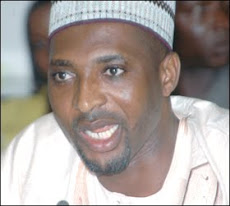
Alhaji Collins Dauda, Minister for Lands and Natural Resources
Austerity measures put in place by President Millls to put the economy back on track, appears to have suffered a jolt, following the discovery that Mr. John Owusu Amankrah, Managing Director of Jowak Sawn Mills Limited, who was recently appointed to the board of the Forestry Commission (FC) by the president, owes the same institution he is supposed to superintend ¢12 billion.

The debt is said to have brought the FC’s finances to its knees, but all efforts to get the board member to settle his indebtedness have proved futile.

Mr. John Owusu Amankrah admitted that his company owes the FC, but denied the ¢12b figure being bandied around.

He claims the FC also owes him ¢14 billion, which has not been settled. This reporter gathered that following the refusal of Jowak to settle the indebtedness, the Chief Executive officer (CEO) of the FC, Prof. Nii Ashie Kotey, wrote a strongly-worded letter dated September 2, 2007 to the former, asking him to pay the money or face the consequences.

The letter, which was under the caption ‘Demand notice/legal action,’ stated “Your Company was requested to fulfill some requirements, as well as pay fully for the volume of teak trees to be harvested. Up to date, your company has an outstanding balance of GH¢1,243,047.46 to be paid, which contravenes the conditions under which the permit was granted.

“Your company has been given up to September 15, 2008 to make all its financial obligations to the Forestry Commission without fail. From September 15, 2008, the Commission will resort to the following against your company - Stop your operations, publish your company’s name in the print and electronic media as a defaulter, and therefore not of good standing, and resort to legal action against your company.”

The Chronicle learnt that Jowak could not meet the above demand issued to the company by the CEO before the New Patriotic Patrty (NPP) lost power.

When National Democratic Congress (NDC) took over, they also gave the company another period to settle the debt, which expired on September 25th this year, but the company has still failed to pay the money into government chest.

Surprisingly, the powers that be, have gone ahead to offer another concession to the company to harvest teak trees.

In a letter dated July 6th 2009, Mr. F. S. Amoah. Director of Plantations, directed some of the zonal plantation managers in the Ashanti and Brong Ahafo regions to provide uninterrupted services to the company to harvest logs that fall within their jurisdictions. “You are hereby directed to allow the company to operate, and provide them with uninterrupted services,” the letter stated.

This development is said to have incurred the displeasure of some of the board members, who think the decision infringes upon the transparency and accountability being preached by the government.

Mr. John Owusu Amankrah told The Chtronicle, when he was contactedthat he owes the FC ¢9 billion and not ¢12 billion. According to him, the debt emanated from the auction of forest reserves to him at the cost of ¢60 billion, which has paid, leaving a balance of ¢9 billion.

He also claimed the FC also owes him ¢14 billion in loans he granted the commission. According to him, somewhere in 2007, the FC approached him for a loan. As part of the agreement, the then sector Minister, Cecilia Obeng Dapaah, gave him concession to harvest trees to cover the debt.

He however regretted that an injuction had been placed on the forest that was allocated to him, so he has not been able to harvest the trees to recoup his money.

The Chronicle

Ghana:Castle Boys Fight Over Cash


PrintE-mail

Image
John Martey Newman
Confusion is raging over the salaries of members of the National Democratic Congress (NDC) who were employed to work at National Security and the Seat of Government since the party came to power this year, and ‘betrayal’ best describes their mood.

DAILY GUIDE has information that the said workers have pounced on the Chief of Staff, Martey Newman, for their unpaid salaries and have threatened to prove their importance and defend their rights if the money is not released to them.

They have also threatened that unless they are given the money due them, they would expose any party appointee who receives any ‘back door’ envelop or money for logistics and party work.

While many of them have not received any salary since they were employed in February this year, a handful of them were given only two months’ salary a few weeks ago, with an explanation that the rest would not be paid them because their working conditions had just been regularized.

The workers are mostly security operatives around the President and his Vice, Protocol Officers, office attendants, drivers and ‘hangers-on’ who were employed on the basis of their party loyalty and not through the main stream civil service.

Reports say since February, the workers were given a monthly allowance of GH¢300 each until last month when they protested and insisted on receiving salaries and not allowances.

The Chief of Staff was thus directed to prepare their salaries, but they became more infuriated when Mr. Newman, after the said preparation of salaries, handed them a two-month’s salary each, with some of them receiving nothing.

To make matters worse, many of them had their allowances slashed by as much as 50 percent, with an explanation that things would get better soon so they should hold on for better times ahead.

The explanation seems not to have gone down well with the workers who insist their contribution to the party’s victory is not different from that of other party appointees who are believed to be receiving bigger booties and living in luxury.

The workers have explained that they feel cheated because a number of persons who were passive during the campaign for power and many others who were not even part of the campaign, have been given lucrative appointments while some even travel with the President and enjoy juicy booties in the name of the party.

By Halifax Ansah-Addo

Sunday, November 29, 2009

GHANA:$850,000 fraud case takes another turn

The $850,000 fraud case involving two lawyers took another turn Thursday when the trial judge who had been authorised by the Chief Justice and the Attorney-General to hear the matter told parties in the case that he had been restrained from further hearing the matter by a High Court judge.

The trial judge, Mr D. E. K. Daketsey, told the prosecution and the defence teams that he had been served with an order of injunction restraining him from hearing the case until the determination of a suit brought against him by the two lawyers.

According to the judge, the lawyers, Joseph Kwame Owusu Asamani and Ekow Amua-Sekyi, who are facing charges of forgery and fraud, sought the order from the Human Rights Court, presided over by Mr Justice U. P. Dery, last Friday.

According to counsel for the two lawyers, Mr James Agalga, November 12, 2009 had been fixed for hearing the motion for an order of prohibition directed at the judge whom his clients had accused of making bias statements against them.

The prosecution had stated that the two allegedly prepared a Deed of Assignment, unknown to the complainant, Gordon Etroo, scanned his signature on it, registered it at the Lands Registry and presented it to Howard Eric Ewen, the Managing Director of Keegan Resources, who also signed.

On March 18, 2007, the two allegedly forged a judgement titled 'Axex Company Limited versus four other defendants' and inserted an order by a High Court judge for the recovery of a mine known as Bonte Esaase Gold Mine.

According to the prosecution, the two lawyers, without the knowledge of Samuel Etroo and Mr Kwame Opoku, initiated a civil suit number BL35/07, as 'Kwame Opoku versus Sametro Company Limited'.

However, the two have not appeared before the court to answer the charges.

The trial judge, Mr Daketsey, who did not disclose the grounds of the injunction, said he had since been served with a writ of prohibition by the two lawyers.

The lawyers were said to have sought the order on the grounds that the judge was likely to show bias if he went ahead to hear the case against them.

The judge told prosecutors and defence lawyers that he had instructed his solicitors to contest the case because he had no personal interest or whatsoever in the case.

He also told the parties in his chambers that he felt aggrieved because the two lawyers had, on a countless number of occasions, refused to appear in his court to answer charges levelled against them.

Obviously aggrieved at the turn of events, Nana Ato Dadzie, who is counsel for the complainant in the case, told journalists that the common practice was for the lawyers to be in court to state why they were absent.

He said the case had had a chequered history because it took more than two years for the lawyers to be put before court.

He said the Attorney-General called for the docket for study and on October 22, 2008 she formally wrote to the court authorising it to proceed with the case, adding that the Chief Justice had also authorised the judge to hear the case.

Nana Ato Dadzie said although the two lawyers were at liberty to go for a prohibition order, he was of the view that such antics were calculated to frustrate the court process.

He also indicated that his client was an interested party and he, therefore, intended to join the suit the Human Rights Court.

He further indicated that the interest of justice would be served if all parties had their day in court.

No definite date has been fixed for the hearing of the criminal matter due to the latest twist.


Source: Daily Graphic/Ghana

Thursday, November 26, 2009

NDC Corruption: DFID Whistleblower Says £18m Vanished In '99


Is Britain's aid money well spent? One expert working in Ghana raised doubts - and was sacked. Rosie Waterhouse on the whistle-blower and the missing £18m Howard Horsley is an idealist, committed to overseas aid.

Over the years he has worked as a volunteer, a paid teacher and a VSO field officer in Africa. Then, in 1999, at the age of 54 and with a successful career as a headteacher in England behind him, he applied for a job with the Department for International Development (DfID).

"I was thrilled by the expansion of the overseas aid programme under the newly elected Labour government and keen to make my expertise available," he recalls. In May that year he took up a post managing the education field office (EFO) in Ghana, administering a British aid programme worth £50m over five years.

He liked Accra, the capital, and made plans for his wife to join him, but within a few weeks he began to notice things at work that he didn't like. As months passed, he grew more and more concerned about what he describes as "lax financial controls, unchecked powers of patronage and the potential for mismanagement and corruption".

He reported these concerns to DfID in London in e-mails, memos and telephone conversations. Yet, instead of seeing them investigated, Horsley was summarily sacked and denied a reference. It was a personal calamity. For the past five years, this former head of a tough Grimsby comprehensive, who has a glowing Ofsted report on his record, has been unable to find work. With the vigorous support of the MP Austin Mitchell, who describes his treatment as "monstrous", Horsley has fought to have his case reviewed and his complaints investigated. Now he has decided to tell his story.

It is a story that raises important questions about DfID's control over aid spending - at a time when the G8 summit has just agreed to double aid to Africa by 2010, and when our government is assuring us that our aid money is not seeping away through corruption and poor management. And, while the government insists it has done nothing wrong, uncertainty remains about its past procedures and about the fate of no less than £18m in aid.

More worrying still, it is now clear that Horsley was not the first British aid official in Accra to raise doubts about financial control. At the time he went to Accra, Britain's policy for distributing aid had shifted from big projects to local programmes administered through the Ghana Education Service, with staff at the British education field office working alongside officials in the Ghanaian education ministry.

Horsley soon heard complaints from other aid agencies, and from the Ghanaian minister and his officials, about the way money was spent and contracts awarded without adequate accounting or monitoring by DfID. Incidents included a request to authorise spending of £32,000 on office furniture, when the furniture had already been bought; the failure of DfID to provide the Ghanaian education minister with a full statement of how education aid was being spent, and the potential use of aid as, in Horsley's words, "a means of dispensing personal favours".

The most mysterious incident came after Horsley was told by the Ghanaian deputy education minister in August 1999 that Clare Short, the then secretary of state for international development, had pledged an extra £18m in aid. When none of this money turned up, Horsley made inquiries with the Ghanaian accountant general - who, he says, confirmed in September 1999 that it had been received by the government.

The money, however, did not find its way into the usual education aid channels, so Horsley, alarmed about the fate of such a sum and about the other problems he had found, wrote to London requesting a formal, independent investigation of the conduct of DfID affairs in Ghana.

Soon afterwards, on a working trip to northern Ghana, he caught typhoid and returned to Britain to recuperate. On his recovery he was called to a meeting at DfID headquarters on 6 January 2000. He thought this was to discuss the investigation he had requested and also to complete his midterm performance review, but he arrived to find that it was a disciplinary hearing. It didn't last long. Blamed for a breakdown in communication and a lack of coherence in the presentation of policy, he was sacked with immediate effect. Horsley strenuously denied the charges and received strong support from international colleagues, but, when he returned to Ghana to assemble evidence for his appeal, he found that his filing cabinets had been emptied and his computer files professionally wiped.

DfID then withdrew his formal right of appeal and threatened him with the Official Secrets Act if he spoke out. Claiming protection as a whistle-blower under the Public Interest Disclosure Act, Horsley sought to have his dismissal investigated first by DfID itself and then at an employment tribunal. The tribunal said it had no jurisdiction because he had not been employed for long enough and had not lodged his Public Interest Disclosure Act claim soon enough.

The civil service commissioners brushed him off, too, saying they could not investigate as DfID claimed he was employed on contract, not as a civil servant. The case has outraged Austin Mitchell, who raised it in the House of Commons and has written to Hilary Benn, the current Secretary of State of International Development, asking for an independent inquiry. Mitchell told the New Statesman: "As a result of his attempt to blow the whistle on financial inadequacies and possible maladministration, this man has been out of a job for nearly six years and that's a monstrous way for DfID to behave.

They made Howard a sacrificial victim. He was an embarrassment in raising these concerns. The proper procedure should have been to investigate complaints and tighten up procedures. They didn't do that." One body that has investigated DfID aid to Ghana is the National Audit Office (NAO), which reported in a letter to Mitchell: "At no point . . . has any evidence emerged to suggest that financial impropriety or mismanagement occurred within DfID."

But the letter added that "investigations revealed areas where the department might usefully tighten up its procedures and controls, which they are doing". As for the mysterious £18m, the audit office initially said that DfID claimed no such amount had been paid to Ghana in 1999. Then, in May 2003, the NAO admitted that £18m had been paid, in 2000, as "budgetary support". It explained: "It follows that for payments of budgetary support it is not possible directly to answer the questions 'What was it for?' or 'How was it spent?', except to say that it added to the resources available to the government of Ghana." This is a remarkable admission: put bluntly, it means that neither DfID nor the NAO could say what became of £18m of British taxpayers' money.

Since that investigation, the NAO has tightened up accounting procedures for aid spending in general and for "budgetary support" in particular. Howard Horsley is entitled to some credit for this, though he has had no thanks for his efforts. DfID maintains that any weaknesses in its financial procedures have been addressed and that Horsley's dismissal was "wholly related to his performance, which did not meet the requirements of the job".

It says: "All parties across Whitehall have been satisfied that DfID acted correctly in relation to Mr Horsley's dismissal and found no evidence of financial impropriety." Horsley authorised DfID to release documents to the New Statesman to clarify the grounds for dismissal. He says they prove that DfID never carried out the investigation he requested weeks before his dismissal and also that it ignored its own disciplinary procedures in sacking him.

But the story does not end there, for, in the course of his campaign, Horsley discovered he was not alone in raising concerns about aid to Ghana. His predecessor there had raised similar doubts about an "absence of checks and balances". Howard Tyers, who now works at Westminster University, has confirmed to the New Statesman that in his time at the Accra EFO he made "a number of complaints" about payments for an expensive office and also for Land Cruisers of an unnecessarily high specification, purchased without the usual tendering process.

Worryingly, after these complaints Tyers's tenure in Ghana also ended strangely. His contract ended in March 1999, but he asked for a three-month extension because he had to remain resident in Ghana, as his daughter was completing her A-levels. This request was rejected in London, and it was only after an appeal by the Ghanaian education ministry that he was allowed to stay.

However, he was sidelined to a research project and denied access to the EFO. And, like Horsley, he found his computer files wiped. The experiences of Horsley and his predecessor raise questions that should worry anyone who cares about aid. Does DfID respond properly to concerns about financial management? Does it ensure that new aid is spent wisely, with transparency and adequate financial controls? DfID says yes, but unless whistle-blowers are encouraged and protected, how can we be sure?

How does Horsley feel? "Angry that DfID has still held no one accountable for what was going on in Ghana; that no one has been held accountable for my entirely unjustified dismissal; that there has been no hearing, anywhere, on the merits of my case. And appalled that DfID can demand good governance in other countries and still fail to meet the most basic standards of good governance in its own internal practices."

He is angry, too, at the waste of years of his career. Despite the emotional and financial costs, he remains determined not to let the matter drop. Transparency International, which campaigns against corruption in aid and trade, would not comment on the case, but its executive director, Chandrashekhar Krishnan, was clear about one thing: "Any development organisation should have a policy of encouraging whistle-blowers and of ensuring that, if someone has suspicions to report, there is a mechanism to allow that person to express those concerns in a way which will not attract recriminations." The Horsley case does not seem to match that standard and it will deter, not encourage, future whistle-blowers.

Source: The Statesman - The Statesman

No wonder education in Ghana under NDC, Rawlings and Mills suffered a serious set back because of corruption.

Sunday, November 22, 2009

Malpractices uncovered in NHIA in Volta - Akototse

Ho, GNA - Mr Elliot Nestor Akototse, Volta Regional Manager of the National Health Insurance Authority (NHIA), has said that serious malpractices were uncovered during "clinical auditing" of the scheme in the region.

He said that the NHIA would evaluate the findings and take the necessary actions.

Mr Elliot Nestor Akototse was speaking at the opening of a three-day strategic planning seminar for personnel of the National Health Insurance Scheme (NHIS) in the Volta Region, in Ho on Friday. The seminar which was on the theme: "Delivering on the NHIS promise", was to brainstorm on the successes and challenges of the policy five years after it was started, and to strategize to strengthen it. Mr Joseph Amenowode, the Regional Minister, who opened the seminar, promised to facilitate efforts aimed at preventing people from sabotaging the scheme.

The Minister said that he was aware that some miscreants had been identified in the exercises and that Volta Regional Coordinating Council (VRCC) would help tackle fraudulent deals. "We members of VRCC shall broaden and intensify our monitoring and coordinating activities to strike out and bring to book persons whose activities seek to frustrate the suucessful implementation of the NHIS in the region and the country at large", Mr Amenowode said. Mr Syvelster Mensah, Chief Executive Officer of the NHIA, in a speech read for him, said the Authority would provide training to raise the competencies of the staff and also build administrative linkages among the various schemes on one hand and the schemes and Authority on the other hand. He said that managers of the scheme would be required to sign performance contracts and that "performance management would now be a very vital part of our staff appraisal and reward system".
Source:
GNA

Fighting Corruption is a Must!

What some of us have feared all these years appears to be manifesting. We have been apprehensive that although the various governments of this country have indulged in loud but empty rhetoric about fighting corruption, they are least prepared to do so practically. Either by design or a willful determination to subvert their own measures to fight corruption, these governments have done one thing in one breath against corruption only to undo that very thing in the same breath.

While the various Presidents in this 4th Republic have declared openly their determination to fight corruption, they have failed to provide the practical support to institutions and people entrusted with the anti-corruption drive. It happened under JJ Rawlings and was intensified under Kufuor. Now, under President Mills, that same picture has been painted. Corruption is rife in Ghana and Ghana’s position on the global corruption index has not changed in any positive way because the government lacks what it takes to stem corruption. There is no hope for us if what has been happening doesn’t abate.

And now, if one bold individual stands up to lead the fight against corruption, his life is endangered. A justice of the High Court, Mr Justice Iddrisu Mahamadu says his life is in danger following the trial and conviction of six policemen and four civilians for robbery over which he presided. The threat to Justice Mahamadu’s life was reported to the Inspector-General of Police, Mr. Paul Tawiah Quaye, by the Chief Justice, Mrs. Justice Georgina Wood. In her report, the Chief Justice told the IGP that following the conviction of the six policemen and four civilians by Justice Mahamadu, he has received numerous threats to his life.

The scenario at the court premises portended what is being dreaded today. As reported (Reference: JoyFM Online, Saturday, November 21, 2009):

“Soon after their conviction, some of their family members wailed and vented their anger on the judge and some journalists outside the courtroom. They openly cursed and rained unprintable insults on the trial judge, who was escorted to his vehicle by court clerks and policemen.”

That’s not the first time such a negative conduct has come to notice. When Justice Henrietta Abban convicted Tsatsu Tsikata, she was subjected to similar threats and name-calling. Others have had their share of such ill-treatment even if not reported. This appeal for protection for Justice Mahamadu raises several concerns that the government must address immediately. As part of the efforts to fight corruption and crime, the government must go beyond mere political rhetoric and massaging of public feelings.

When the Kufuor government took action to prosecute NDC functionaries it accused of “causing financial loss to the state,” the NDC rose up in arms. Politicized as issues might be, there was evidence that corrupt practices took place and that the individuals being tried were actively involved in it.

At the turn of the political table, the Mills government began taking action against the NPP functionaries whose corrupt acts (e.g., snatching government property) were evident; but what did we see? The NPP elements also rose up in arms, threatening hell-fire and brimstone. As if cowered into submission by such threats, the Mills government budged, creating a bad-blood relationship between itself and the rank and file of the NDC who think that the NPP elements were corrupt and should be punished.

By rising to the defence of those perceived as corrupt, their sympathizers hinder the anti-corruption drive. Can the fight against corruption really succeed if people rush to defend those known for being corrupt? How do we perceive or conceive corruption as a moral canker or socio-economic and political vice that we must fight to the hilt? Corruption is the root cause of the high crime wave that our country faces.

By its very nature, corruption doesn’t mean only bribe-taking, as most people wrongly conclude. Any act that goes contrary to the norm qualifies as corruption. The Christian Gospel gives us a good example in the form of “adultery,” where Jesus says that adultery is committed even if the individual merely looks at the other’s erogenous zone (be that the backside or breasts) and has mental pictures that arouse sexual pleasure. It is something psychological—conceived in the mind’s eye as an imaginary sense of consummation (be it swallowing saliva at the prospects or fantasizing about the pleasure to be derived from a practical conjoining of sexual passions). In effect, the mental picture of sexual appetite alone is enough evidence of adultery (corruption) even if the act itself is not physically carried out in the end.

In the case of corruption in the public or private sectors of national life, we can identify instances:
  • Tribalism and nepotism in the choice and appointment of office holders, recruitment into the security services, or any other institution;
  • Favouritism in the promotion or laying off of workers (especially under the policy of redeployment or retrenchment);
  • Award of contracts (whether going through appropriate layers of bidding or not) to preferred candidates and ripping off profits in the form of kickbacks;
  • Sidestepping official procedures for managing offices and national assignments (e.g., procurement—over-invoicing or under-invoicing for personal gains);
  • Creating conditions conducive to the greasing of palms (e.g., in the nomination and choice of candidates for enstoolment as chiefs/queenmothers; sale of land; etc.); and
  • Giving or accepting gifts (e.g., foodstuffs, money, tangible or intangible items, etc.) before performing functions within one’s purview (doing in office what one was hired to do and be paid for).

The Church and its pastors are known for their crusading sermons against corruption; but how many of them haven’t been taken to task for abusing their office, preaching against immorality but indulging in it? Judges have been accused of bribe-taking; personnel of the security services (e.g., customs and immigration officers) have done corrupt things; the politicians are known for indulging in corrupt practices (wife-snatching, visa racketeering, abuse of office, etc.); civil servants have institutionalized measures to collect bribes from people calling for processing of their documents; the police collect bribe in the open; school administrators collect bribe before they admit students; many more. Who will claim not to be part of this racket of corruption in Ghana?

Communalistic as our Ghanaian body politic is, one accepts the fact that the milk of human kindness flows through our human streams. Thus, it is not strange for someone “to know” another person in authority somewhere who is capable of helping a distressed person in one way or the other. That’s our natural bent. But when this natural bent is overstretched so as to become problematic, we must pause to reconsider it and make amends.

We have reached a stage where such a drastic reconsideration must be made if we want to fight successfully corruption and its attendant negative consequences. Recourse to the laws that prohibit corruption is our first step. But where do we start from?

There appears to be confusion in terms of what constitutes a “gift,” on the one hand, and what amounts to “corruption” (bribery), on the other hand. I have been given to know that somewhere in our Criminal Code (Act 29 of 1960) is a clause that enjoins any member of the Police Service, for instance, who is given any gift by anybody to declare it to the IGP or face severe sanctions. If that is the case, to whom does the IGP declare any gift he/she receives?

The constitution explicitly calls for the declaration of assets by the President and government officials at specific times. But what have we had so far? How will we know their standing at the time they enter office so as not to accuse them of corruption when their assets begin piling up? Do you remember Isaac Edumadze of the NPP while he was in charge of the Central Regional Administration? Now, the searchlight is on Ama Benyiwa-Doe of the NDC. The Northern Regional Minister and the NDC Regional Chairman have been trading accusations of bribery and corruption against each other. Other instances of corruption have come to notice, but the government doesn’t seem to care a rap about such public apprehensions.

Allegations of corruption deserve to be followed up and investigated for us to know what the truth is. Kofi Wayo has already accused President Mills and his NDC government functionaries of positioning themselves to benefit from a $14-million Vodafone bribe, but no one has batted an eyelid in government or the anti-corruption institutions. Hello, Mahama Ayariga and Alban Bagbin; are you there?

The MP for Asikuma-Odoben-Brakwa, P.C. Ofori-Appiah, has cried himself hoarse on bribery allegations against the Kufuor-led NPP government until this era of the NDC. His fellow NPP functionaries derided him as “mad” and pooh-poohed his allegations. Even if he is “mad,” does it mean that his allegations too are “mad”? What has anybody done to follow the numerous leads that he has provided? Instead of doing so, the government is frozen and turns attention elsewhere. How can we truly say that we are interested in fighting corruption if we do not regard allegations against public officials as worth our bother?

Many of those who openly express contempt for Rawlings appear to be doing so because they “hate” him for professing a strong abhorrence for corruption and presiding over the shooting to death or imprisonment of Ghanaians that his military governments (AFRC/PNDC) accused of corruption but failing to live by his own words. The allegations of bribery involving the late Abacha of Nigeria, the Scancem (Norwegian) case, trial of Nana Konadu-Agyemang-Rawlings over Caribdem, and many other instances featuring his name readily come to mind, although no one has yet pinned him down. The point is that such allegations create credibility problems and deflate confidence in the fight against corruption.

Institutions that have been established to fight corruption have been systematically starved of funds and their personnel brow-beaten into fearing for the security of their jobs if they dare perform the very functions for which they were hired and paid monthly. In effect, our governments have adroitly turned those institutions into paper tigers while massaging public feelings that they are fighting corruption.

The Serious Fraud Office should by now have been well-established and supported to perform its legitimate functions. Instead, it appears to be falling prey to the vicious political game that the party in power lures it into. The truth is that the SFO is impotent. As for the CHAJ, it is doomed already.

The Criminal Investigations Department of the Police Service is also mired in corrupt practices by its personnel and has lost public confidence. Under Kufuor, the loss of quantities of cocaine from the custody of the Police and several other corrupt acts by the police personnel themselves over the years have completely dented the image of the Police Service. It cannot purge itself of such a sordid image nor is it clear what it can do to repair it. If the people who are recruited to fight corruption are themselves corrupt, where is the guarantee that the fight against corruption will ever succeed?

We have reached a stage in the handling of national affairs to know that we cannot make any progress if we do not allow the laws of the land to function effectively. We can’t help but turn to the United States for examples. In the U.S., the law doesn’t only bark; it bites very deep. It doesn’t matter who is involved; the law will not spare anybody who falls foul of it. That’s why the US citizens fear the law. They know that they will not be spared. Remember the case of the former Governor of Illinois (Rod Blagojevich) and the former Congressman Jefferson whose corrupt deals reached Ghana for which he has just been convicted? Even officials at the White House face the full rigours of the law if they misbehave.

In our case, it is the reverse because the very people who are entrusted with enacting, interpreting, or enforcing the law are the first to flout it with impunity. Nobody seems prepared to do what will instill “the fear of the law” in anybody. There are grandiose designs on paper to fight corruption, which every government functionary openly refers to, but does not fear or comply with. Human and infallible, though we are, there is hope that if we do the right thing, we will shame the devil. Are we prepared to do the right thing to stem corruption and purge ourselves of greed and filth?

President Mills needs to know that his government cannot escape blame if it does nothing concrete to stem corruption. The fact is that if he presents himself as incorruptible (as JJ Rawlings has bored us with), he will not make any difference. It is the institutions of state that must be strengthened to make corruption unattractive, not one or two individuals projecting themselves as such. When our institutions are strong enough to stem corruption, the individuals will not be tempted to indulge in it. As President Obama has already cautioned us, the time has come for us to break away from the mentality of “strongmen” to that of strong institutions of state! That is how countries brave the storm and move forward. Ghana must move forward too. I challenge President Mills to make the difference in the fight against corruption.


By Dr. Michael J.K. Bokor
E-mail: mjbokor@yahoo.com

Thursday, November 19, 2009

Investigate N/R Minister; NPP youth in Tamale demand

Northern Regional Minister, Stephen Sumani Nayina


Youth of the opposition New Patriotic Party in Tamale, want the Mills government to investigate allegations that the Northern Regional Minister sold four pick-ups belonging to the RCC to himself.

The group is also asking that Mr Stephen Sumani Nayina be probed over claims that he dabbled in the sale of contracts in contravention of laws which dictate that such contracts be awarded through a competitive bidding process.

The Northern Regional Chairman of the ruling National Democratic Congress, Alhaji Sumani Zakari last week levelled the allegations against Mr Nayina in a feud that saw the two throwing mud at each other.

The regional Minister denied the allegations, accusing the Chairman of grabbing six out of sixteen road contracts awarded in the region.

But a statement signed by the NPP youth spokesperson Salifu Sule, and issued in Tamale, says the allegations needed to be investigated particularly because they came in the wake of similar ones made against Mr Nayina.

According Joy FM’s Northern Regional Correspondent, Mahama Shaibu, the NPP youth say Mr Nayina’s denials were not enough, arguing only an independent body could exonerate him of the charges.

The group believes the president would be dealing his promise of vigorously fighting corruption a heavy blow, if he failed to investigate the matter.


Story by Malik Abass Daabu/Myjoyonline.com/Ghana

M&J saga: Deadline extended for officials

Emile Short, Commissioner of CHRAJ
The Commission on Human Rights and Administrative Justice (CHRAJ) has extended the deadline for some of the officials who were mentioned in the Mabey and Johnson (M&J) bribery affair to present their responses.

This follows requests from the affected officials for more time to respond.

Consequently, Messrs Baba Kamara and Kwame Peprah have been given up to Friday, November 20, 2009 to respond to CHRAJ’s queries, while Alhaji Ahmadu Seidu was given up to Wednesday, with Mr Ato Quarshie’s response expected by the close of Tuesday, November 17, 2009.

The Commissioner of CHRAJ, Mr Emile Short, who disclosed this, said the decision to resort to the courts to compel the implicated officials to respond had been put on hold because of the extension requested and granted.

He confirmed the receipt of some information from Dr George Yankey’s lawyers seeking to show that the former had not been implicated in any court suit.

He added that all the government officials allegedly implicated were never arraigned before the UK court, nor were any charges preferred against them.

The UK court could, therefore, not have convicted them, though the court, on the basis of evidence given by M&J, accepted statements by the company that it had set up a special fund from which bribes had been paid to government officials to secure and maintain their contracts.

“Our investigation, therefore, is based on the statement by the company which the court accepted and our objective now is to determine whether the evidence given by the company is supported,” the commissioner said.

“This requires laying hands on documents the courts relied on in the decision, but it has not been very easy to get all the documents.

Efforts at getting those documents from the Serious Fraud Office (SFO) of the UK are proving difficult, primarily because the issue boarders on trans-national crime,” he said.

Mr Short said with trans-national crime, there was the need to invoke the Mutual Legal Assistance Scheme Agreement, an agreement of co-operation in the investigation of trans-national crime between countries that requires the use of a central authority in each country where these crimes have been committed and are being investigated.

In the case of Ghana, the central authority is the Attorney General (AG), while in the UK it is the Home Office.

Although CHRAJ has the court proceedings, and the AG has submitted to the commission all the documentation on the matter, it still does not have certain relevant documentation referred to in the judgment and a request has gone through the central authority of Ghana, the AG’s Department, through the UK Home office to the SFO in the UK.

Mr. Short, expressing the difficulty in its investigation process into the matter, stated that if it had been a local investigation, CHRAJ could have compelled anyone to produce the evidence needed, explaining, however, that its jurisdiction did not extend outside the borders of the country and so it could not do that in this matter.

He underscored the fact that the M&J case had been decided on a plea-bargain agreement, in which the company decided to admit to wrongs in return for a less stiff punishment, saying that such cases would not have any witnesses to testify, a situation which added to the difficulties.

Meanwhile, CHRAJ is studying the rules covering a grant on the acquisition of tractors by co-operative and small-holder farmers in respect of a petition against the Presidential Spokesperson, Mr Mahama Ayariga and Mr. Ato Ahwoi.

The two have, meanwhile, submitted their responses to queries from CHRAJ after petitions had been lodged with the Commission that the two used their positions as public officials to acquire the tractors meant for rural poor farmers. Mr Short said the Commission would come up with the next step to take after studying the agreement.


Source: Daily Graphic

Wednesday, November 18, 2009

NDC Men Taking $14 Million Bribe!


The Founder and Leader of the United Renaissance Party (URP) Mr. Charles Kofi Wayo, has said that he has information that members of the National Democratic Congress (NDC) government are in line to receive $14 million in bribes from Vodafone, 70% share owners of Ghana Telecom!


He has hinted that very senior members of government, including President John Evans Atta Mills and Minister for Communications Haruna Iddrisu may be benefiting from the lucre.


“We fought hard, Atta Mills and what is his name, Iddrisu, the Minister of Communications what is his name, he has forgotten his speech! We said we would overturn the Vodafone agreement! But now, it is alleged Vodafone has put out fourteen million dollars to bribe them! Have they taken the bribe? I have the information and I have seen how it works with Ghanaians!Iddrisu Haruna has changed his tune, and Atta Mills doesn’t seem to be as hard at his game as he should be!”


Kofi Wayo lamented. He has however said that he has reported his information to the President’s National Security Advisor, General Nunnoo Mensah and his National Security Coordinator Larry Gbevlo Lartey and he knows that they would get to the bottom of the issue.


“But I know that General Nunnoo Mensah is hard on it, and may God bless him! I know Gbevlo Lartey is hard on it! He’s outraged and I know that heads would role for the defence of taxpayers of Ghana,” Kofi Wayo said.Mr. Charles Kofi Wayo was speaking on his Sunday evening program ‘Feed Your Mind’ on Vibe FM, Accra on November 15, 2009. Earlier, Mr. Wayo, who has the platform to get his grievances off his chest every Sunday evening, had engaged in an over one hour of rambling, used mostly to attack his political and personal opponents and to describe them as thieves with no brains. For instance, he accused former President Kufuor of selling of Ghana Telecom just to get an award from Chatham House Award and of selling of the state asset to pocket the money.


He described Jake Obetsebi Lamptey, a leading member of the NDC, as a person with no brains who should ideally be plucking chickens by way of a profession, but had high praises for General Nunnoo Mensah and Col. Gbevlo Lartey. Rambling all over the place, he accused former President Kufuor of killing Alhaji Issah Mobila (the case is in court) and said that Kufuor should be in jail, even though he has the support of all leading members of the New Patriotic Party (NPP).The United States ranked 19th,with a score of 7.5, while other aspiring global superpowers ranked substantially lower.


Source:Searchlight

Ghana ranks 69 in global corruption index

Ghana was ranked 69th in Transparency International's Corruption Perception Index (CPI) which was released Tuesday. Ghana moved down two spots from its 2008 ranking, with a score of 3.9 out of 10.

Botswana, in 37th place, was the highest ranked African country, and one of only three to score more than five points, the other two being Mauritius and Cape Verde.

Ghana was ranked well ahead of most of its neighbors, Nigeria (130), Côte d´Ivoire (154), Togo (111) and Burkina Faso (79), but fell behind other African countries like Botswana(37), Cape Verde(46), South Africa(55), Namibia(56) and Tunisia(65) .

The index ranks the 180 participating countries according to the degree to which corruption is perceived to exist among public officials and politicians. The CPI draws on 13 different polls and surveys from 10 independent institutions, and includes surveys of business people and country analysts from organizations like the World Bank, the Economist Intelligence Unit and Freedom House.

Transparency International defines corruption as "The abuse of entrusted power for private gain." At the top of the list stands New Zealand, with a CPI score of 9.4, and at the bottom lies Somalia, with a score of 1.1.

Rounding up the top three are Denmark in second and Singapore, tied with Sweden in third. Down on the bottom, Somalia was narrowly beaten out by Afghanistan and Myanmar.

Ghana Pundit Headline News

E-mail

Enter your email address:

Delivered by FeedBurner

Oh Corruption